
How to Price Your Home Strategically in the Eastern Kansas City Metro
One of the first questions almost every seller asks me is some version of this:
“Jen, what do you think my house is worth?”
It's an important question. But when you're getting ready to sell, there's another question that's just as important:
What should we list it for?
Those two numbers aren't always exactly the same.
Pricing a home isn't about picking the highest number we think we can get away with. It's also not about pricing low just to get it sold quickly. The goal is to look at your home, your competition, recent sales, and what buyers are doing right now, then choose a price that puts you in the best possible position from the beginning.
Here in the eastern Kansas City metro, that can look very different from one property to another. Pricing a subdivision home in Blue Springs isn't necessarily the same as pricing acreage outside Grain Valley, a property with a shop in rural Jackson County, or a house that needs some updating in Independence.
That's why I don't believe pricing should ever be a one-size-fits-all calculation.
How Do You Determine What Your Home Is Worth?
When I prepare a comparative market analysis, or CMA, I'm looking at homes that are actually relevant to yours.
That usually includes homes that have recently sold, homes currently for sale, and homes that are under contract.
Recent sales are especially important because they tell us what buyers have actually been willing to pay.
Active listings tell us something different. They show us your competition.
That's an important distinction.
Someone can list a house for any amount they want. That doesn't mean a buyer will pay it.
If a similar house down the street is listed at $425,000 but has been sitting on the market for three months, I don't automatically consider that proof your house is worth $425,000. I want to know what similar homes are selling for, how quickly they're selling, and what makes your property different.
I'll also consider things like:
Square footage and layout
Age and overall condition
Updates and renovations
Finished basement space
Garage size
Lot size and location
Acreage
Outbuildings, barns, or shops
Neighborhood and school district
Current competition
Current buyer demand
There are a lot of pieces to the puzzle, which is why an online home-value estimate can only tell you so much.
Why Is Pricing Your Home Correctly So Important?
The first several days your home is on the market are important.
That's when it's new.
Buyers who have been watching for a home like yours see it pop up in their searches. Their agents see it. It appears on real estate websites as a new listing.
You want to take advantage of that attention.
If buyers look at the price and immediately think, That's too much for that house, many won't schedule a showing just to see if you're willing to negotiate.
They'll move on.
That's why I don't love the idea of automatically adding extra money to the price simply to "leave room to negotiate."
Sometimes that strategy makes sense. Sometimes it doesn't.
We need to look at the market you're actually entering.
What Happens If You Price a House Too High?
Overpricing doesn't necessarily mean your home won't sell. But it can make selling harder than it needs to be.
Buyers compare houses.
If your home is priced at $400,000, they're going to compare it with the other homes they can buy for around $400,000.
If those homes have updated kitchens, newer flooring, finished basements, or other features yours doesn't have, your house may make those listings look like a better deal.
There's another problem with starting too high.
The longer a house sits on the market, the more buyers start wondering what's wrong with it.
Sometimes there's absolutely nothing wrong with it. The price simply missed the mark.
Eventually the seller may reduce the price, but by then you've lost some of that initial excitement that comes with being a brand-new listing.
I'd much rather spend time getting the strategy right before we go live.
Can You Price a Home Too Low?
Absolutely.
I don't believe in automatically underpricing a seller's home just to generate activity.
Your home is a major financial asset, and my job is to help you protect your interests.
There are markets and situations where aggressive pricing can generate competition among buyers. But that should be an intentional strategy based on actual market conditions, not something we do because "that's how you get multiple offers."
There is no single pricing trick that works for every house.
Your Home's Condition Affects the Price
This is one reason I like doing a pre-listing walk-through before we make final decisions about pricing.
I want to see the house.
Online data can't tell me that your kitchen was remodeled three years ago. It doesn't know you've replaced the flooring, added a shop, updated the HVAC system, or spent years improving your landscaping.
It also doesn't know about the things that might concern buyers.
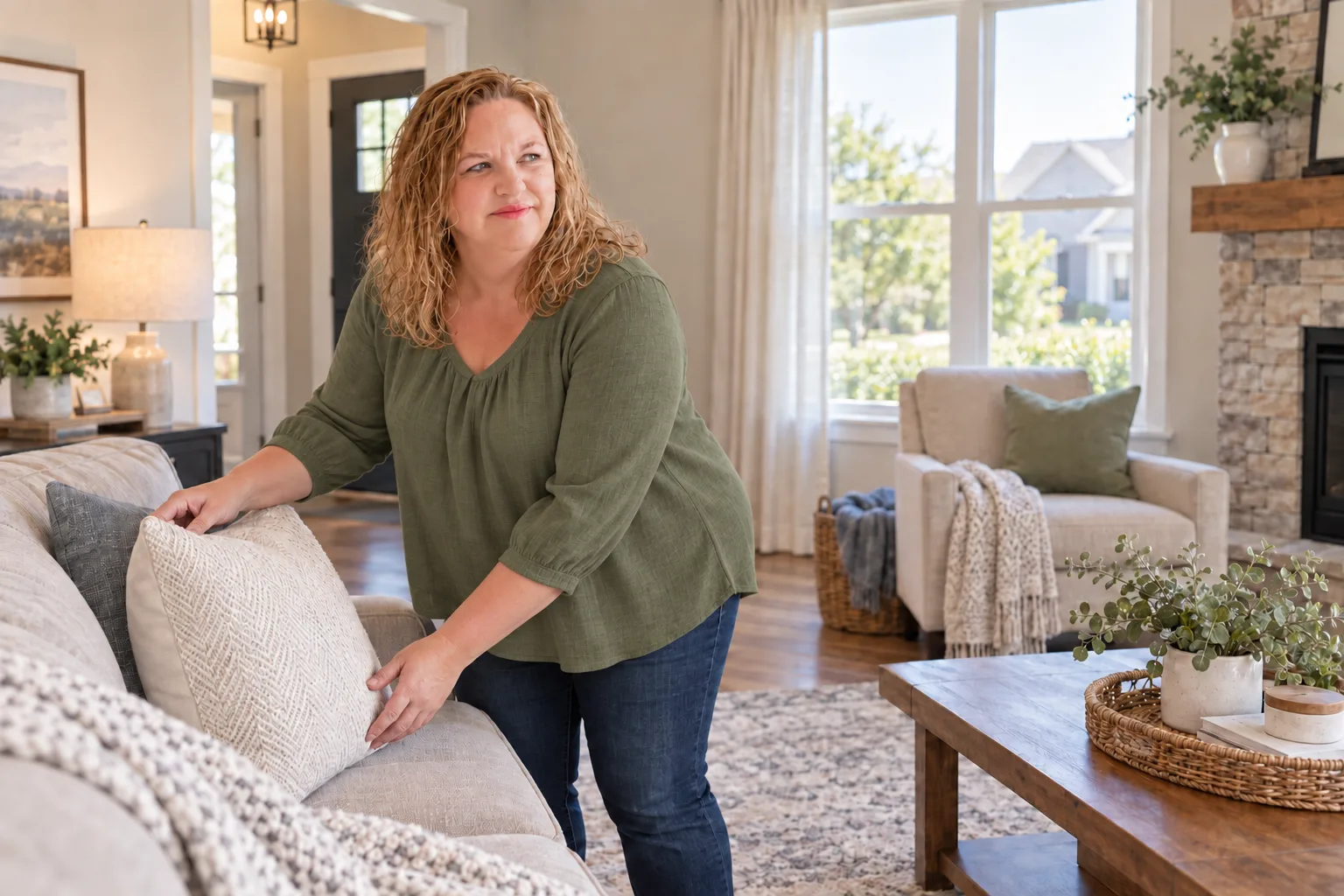
When I walk through a home with a seller, I'm looking at it from a buyer's perspective.
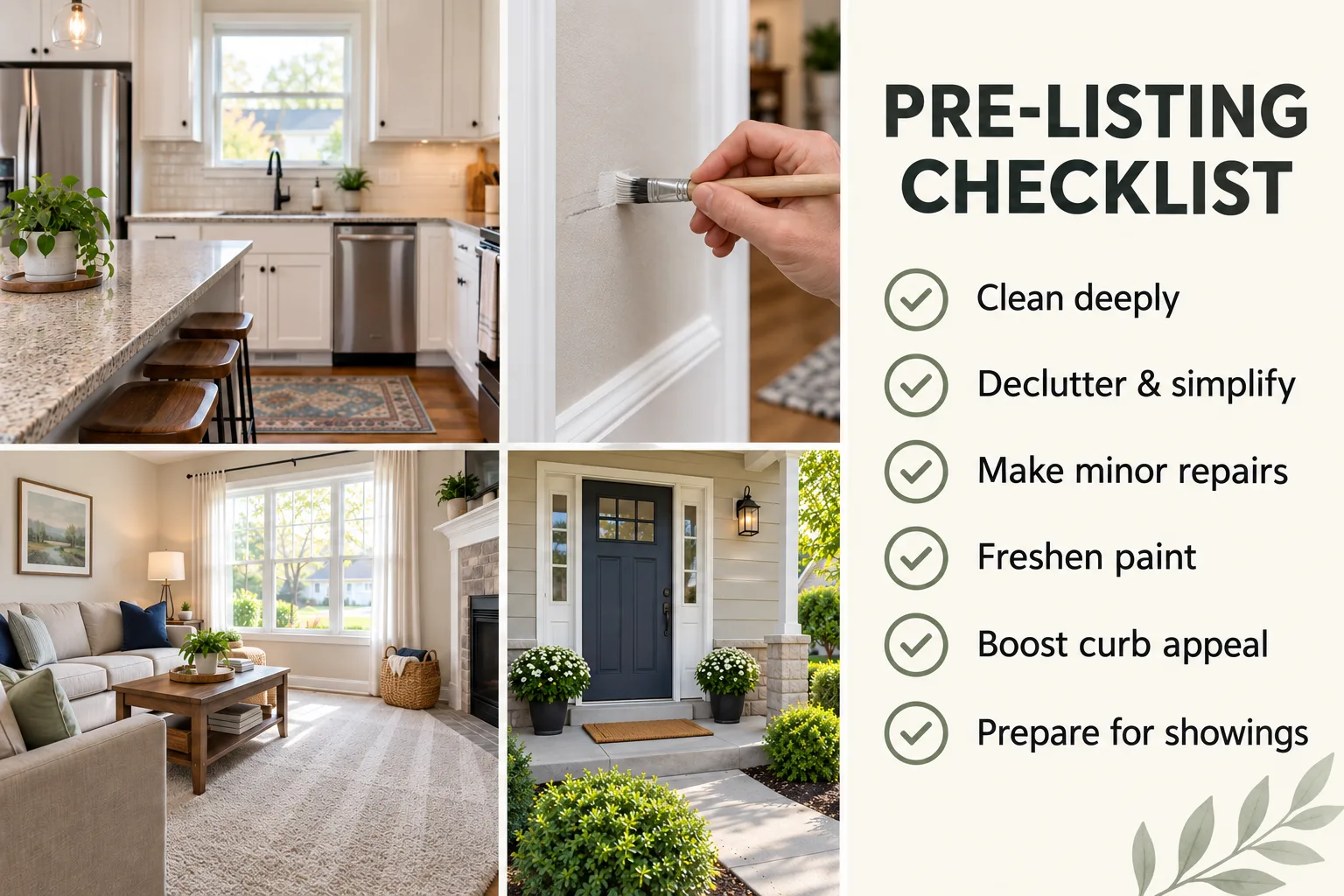
Sometimes I recommend making a few changes before listing. That could be touching up paint, repairing something that's obviously broken, cleaning up landscaping, moving some furniture around, or simply doing a really good deep clean.
I'm not going to walk through your house and hand you a giant renovation list just because you're selling it.
Some improvements are worth doing.
Some aren't.
If I don't think you're likely to get your money back from a project, I'm going to tell you that.
If you're beginning to think about selling, my Pre-Listing Checklist is a good place to start. You can also visit my Seller page for an overview of how I help homeowners prepare, price, market, and sell their homes.
Does Price Per Square Foot Tell You What Your House Is Worth?
Price per square foot can be useful, but I would never use it by itself to price a home.
Consider two 2,000-square-foot houses.
One has a remodeled kitchen, updated bathrooms, a finished basement, new flooring, and a well-maintained yard.
The other hasn't been updated in 25 years and needs a roof.
They're both 2,000 square feet.
They're probably not worth the same amount.
The same thing happens when we start comparing properties with land.
A house on five acres with fencing, a usable barn, and a good shop can't always be compared with another five-acre property simply because the acreage and house size are similar.
This is especially important with rural properties around eastern Jackson County, Johnson County, and Lafayette County. Land, outbuildings, road access, utilities, fencing, property condition, and the way the acreage can actually be used can all matter.
Sometimes we have to dig a little deeper to find the right comparisons.
Should You Use Zillow or an Online Home Value Estimate?
Online estimates are fine if you're curious.
I just wouldn't make a major financial decision based on one.
An automated valuation is working from data. It hasn't walked through your house.
It doesn't necessarily know that the house across the street backs to a busy road while yours backs to trees. It may not understand the value of your particular outbuilding or recognize that your beautifully finished basement is very different from the unfinished one in a comparable property.
It also can't sit down with you and explain why one comparable matters more than another.
Use an online estimate as a starting point if you'd like.
Just don't confuse an estimate generated by an algorithm with an actual pricing strategy.
Should You Price Higher So You Have Room to Negotiate?
Maybe, but not automatically.
This is something I hear pretty regularly:
“Can't we just start high? We can always come down.”
Technically, yes.
But buyers don't shop based on what you might eventually accept. They shop based on the price they see today.
Price can also determine whether your home appears in someone's search at all.
Imagine a buyer has set their maximum search price at $400,000. If your home is listed at $410,000 because we wanted some negotiating room, that buyer may never see it.
Those pricing thresholds are worth considering.
The right strategy depends on your property, current inventory, recent sales, and how much buyer activity we're seeing in your price range.
What About Unique Homes, Acreage, and Rural Properties?
This is where pricing gets particularly interesting.
A standard subdivision may give us several recent comparable sales within a relatively small area.
A rural property might give us very few.
Maybe your house has six acres, a detached shop, fencing, a pond, and a barn.
The closest recent sale has ten acres but no outbuildings.
Another comparable has five acres and a shop, but it's 15 miles away.
Another is close by but has a completely different house.
There may not be one perfect comparable.
That's when we have to look at several pieces of information together rather than relying on a simple formula.
It's also one of the reasons I enjoy working with rural and acreage properties. Having a little land myself gives me an appreciation for the fact that buyers aren't always shopping for four walls and a roof. Sometimes they're shopping for room for animals, a garden, a workshop, privacy, or simply enough space to breathe.
Those things matter when we're figuring out how to position the property.
What If a Buyer Makes a Low Offer?
Don't panic.
An offer is the beginning of a conversation, not necessarily the end of one.
And the purchase price isn't the only number I look at when helping a seller evaluate an offer.
We also need to consider things such as financing, requested seller-paid closing costs, inspection terms, appraisal provisions, contingencies, closing date, and other contract terms.
A slightly lower offer with strong terms can sometimes be better for a seller than a higher offer loaded with requests and contingencies.
That's why I don't want my sellers looking at the price at the top of the offer and stopping there.
We look at the whole thing.
Pricing and Marketing Have to Work Together
Price matters tremendously, but price alone doesn't sell a house.
We also need buyers to see it and want to come through the door.
That means your pricing strategy should work alongside good preparation, professional photography, accurate listing information, strong marketing, and showing the home's best features.
You can learn more about my overall approach to selling on my Seller page.
And if you're still in the early stages and aren't sure whether you're ready to sell yet, that's completely fine. Learning what your house might be worth can help you decide whether selling makes sense in the first place.
So, What Should You List Your House For?
That's the million-dollar question, isn't it?
And unfortunately, there's no honest way for me to answer it without knowing which house we're talking about.
I need to see the property, look at the recent sales, understand what's currently competing with you, and talk with you about your goals.
Then we can make an informed decision together.
The important thing is that your list price should have a reason behind it.
Not because an online estimate gave us a number.
Not because your neighbor thinks that's what it's worth.
And not because that's what you need to walk away with after the sale.
We price based on the property and the market.
Wondering What Your Home Might Sell For?
You don't have to be ready to put a sign in the yard to ask me that question.
If you're thinking about selling in Blue Springs, Lee's Summit, Grain Valley, Independence, Oak Grove, Lone Jack, or one of the surrounding communities, I'm happy to come take a look, talk through what's happening in your particular market, and give you an honest opinion of where I think your home fits.
If there are things I'd recommend doing before you list, I'll tell you. If I don't think something is worth spending your money on, I'll tell you that too.
Sometimes knowing what your options are is the best place to start.
You can learn more about selling with me on my Seller page or contact me when you're ready to talk.