Property tax proration is one of those closing details that can make you stop and say, “Wait, what am I paying for?” The idea is simple: buyer and seller divide the property taxes according to the dates and terms in their purchase contract.
The confusing part is that the tax bill may not be available when the home changes hands. Let’s walk through what that means for your closing statement.
When are Missouri property taxes paid?
Missouri real estate taxes are generally billed late in the year and due by December 31 of that same year. A 2026 bill covers 2026 taxes; it is not a bill that normally waits until the end of 2027.
For example, Jackson County’s Collection Department lists December 31 as the payment deadline. If you buy elsewhere in Missouri, check your county collector’s billing and payment information.
Why does the seller give the buyer a tax credit?
If you close before the current year’s bill has been paid, the closing statement commonly gives the buyer a credit for the seller’s share. That amount is a debit to the seller, reducing the seller’s proceeds.
The buyer then needs to make sure the full bill is paid when due, either directly or through the mortgage servicer if taxes are escrowed. The closing credit is part of settling up between buyer and seller. It does not, by itself, send a payment to the county.
If the taxes have already been paid, the adjustment may instead reimburse the seller for the buyer’s share. Your contract and closing figures determine what applies.
A simple example
Suppose the annual tax amount used for closing is $3,650 in a 365-day year. That works out to $10 per day.
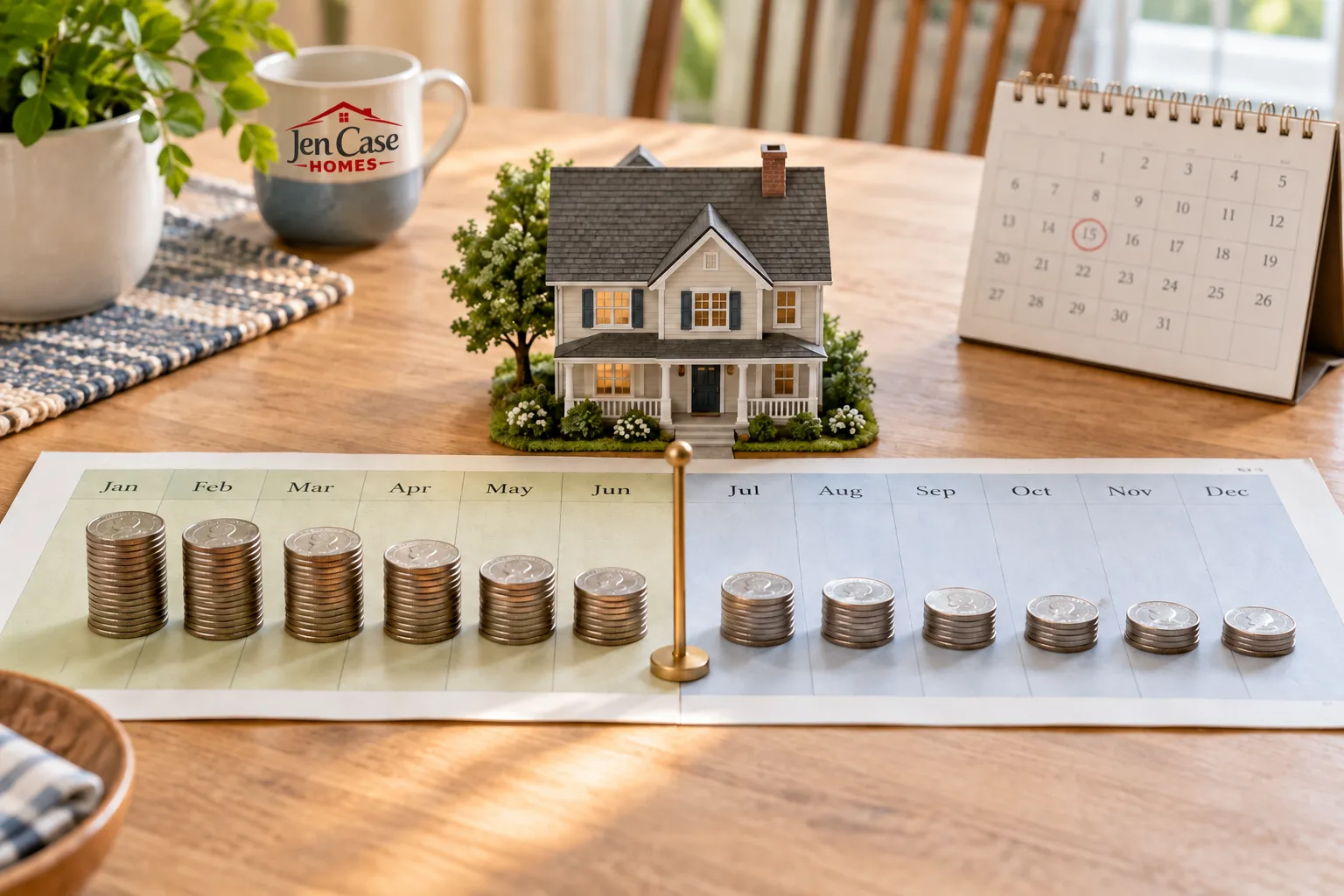
If a July 1 closing assigns January 1 through June 30 to the seller and the closing day to the buyer, the seller’s 181-day share would be $1,810. If the annual bill is unpaid, that could appear as a $1,810 seller debit and buyer credit.
This is an illustration, not a standard Missouri closing calculation. The contract controls which party gets the closing day, and the closing professional should explain the day-count method and tax amount used.
What if the final tax bill is not available?
A closing may use the most recent available bill or another estimate allowed by the contract. The final bill can differ because assessed value, tax rates, or other applicable adjustments change.
Ask whether the proration is final or whether your agreement calls for an adjustment after the actual bill arrives. Don’t assume an estimate guarantees what you will owe, or that buyer and seller automatically settle the difference later.
Tax proration and mortgage escrow are different
The tax adjustment divides an expense between buyer and seller. A mortgage escrow account holds money your loan servicer uses to pay bills such as property taxes and homeowners insurance.
You may see a seller tax credit and an initial escrow deposit at the same closing. Those entries serve different purposes. The CFPB’s Closing Disclosure explainer shows where adjustments for unpaid seller expenses and initial escrow funds appear.
Questions I’d want you to ask before closing
Which tax year and amount were used?
What dates belong to each party, including the closing day?
Have the taxes already been paid?
Is this calculation final or subject to a later adjustment?
Who will pay the county bill, and how will we confirm payment?
For sellers, that tax debit affects what you take home. For buyers, the credit helps account for the seller’s share, but you still need a plan for the full bill. Your title or closing professional can explain the actual calculation, and your lender or servicer can confirm the escrow arrangement.
Let’s make the closing numbers easier to follow
You don’t need to memorize closing math. You do need to understand the figures before you sign. I can help you organize your questions and work with the closing team to get them answered.
Read my Missouri closing-cost guide and guide to the steps between going under contract and closing. If you’re planning to buy or sell in the Kansas City area, let’s talk about your next move.