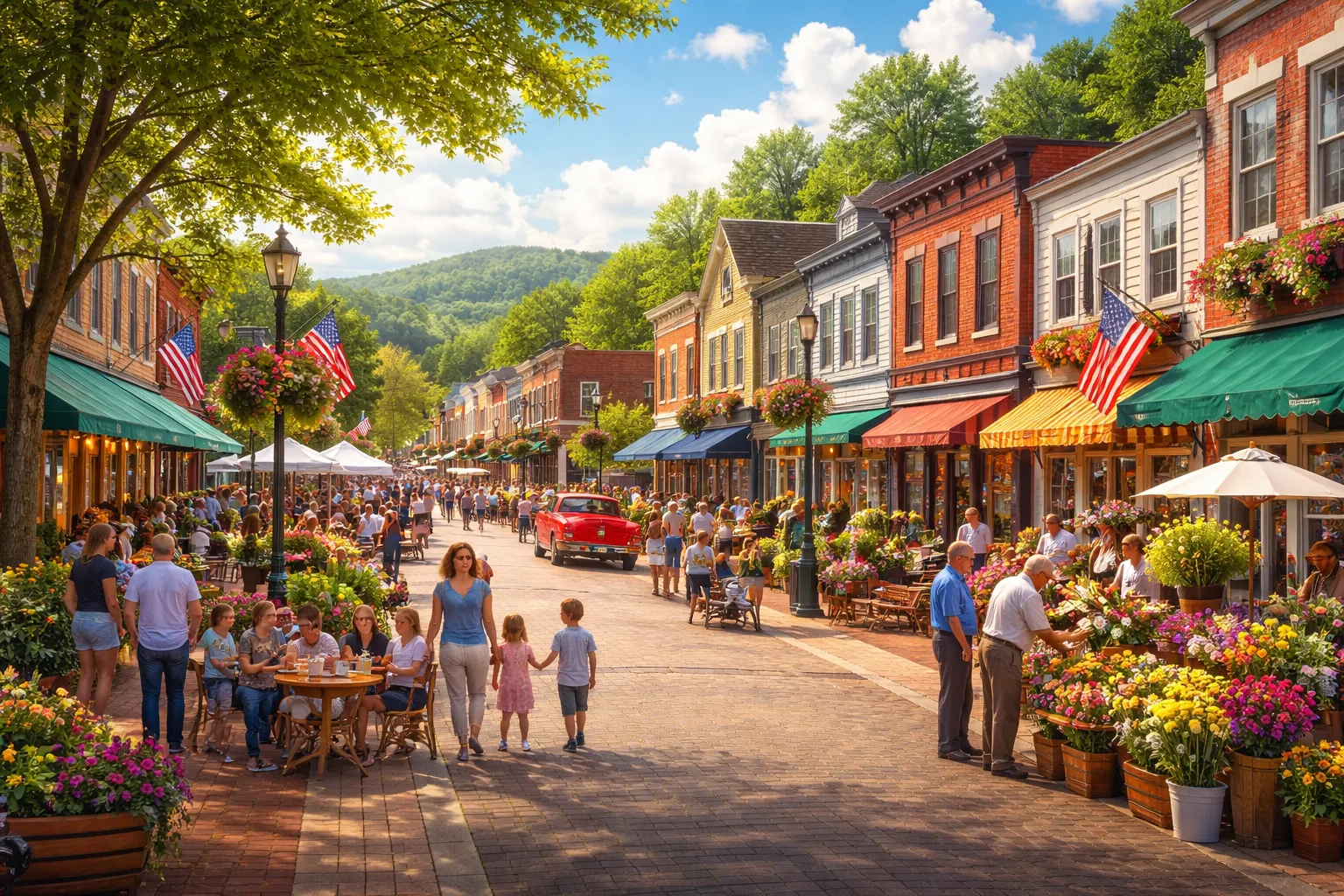
Nobody lies awake at night thinking about their home's square footage. They think about the neighbor who waved them over the fence on a Saturday morning. The restaurant where the owner remembered their order. The school play their kid was nervous about. The moment a new place stopped feeling unfamiliar and started feeling like theirs.
That shift — from house to home, from address to community — is the part of real estate that never shows up on a listing sheet. But it's the part that determines whether you'll be happy you moved five years from now.
What Community Actually Means
Community isn't an amenity. It's not the walking trail or the proximity to a shopping center. It's the accumulation of small, repeated interactions that build a sense of belonging over time. It's knowing that when something goes wrong, people show up. It's the July 4th parade that's been running longer than anyone can remember. It's the local diner that's been there through three generations of the same family's milestones.
Small town Missouri has this in ways that are genuinely hard to find closer to the city. In towns like Lone Jack, Oak Grove, Holden and Kingsville, people still know their neighbors' names, local businesses have owners, not managers and schools know kids as individuals. That's not nostalgia — it's a quality of life that a lot of families are actively searching for and struggling to find.
Why It's Hard to Research
The challenge for buyers is that community doesn't have a Zillow score. You can look up median home prices and commute times and school district rankings. You can't look up whether the people on your street are the kind who check on each other. You can't search for whether a town has the kind of social fabric that makes raising kids feel less isolating and more supported.
What you can do is spend time in a place. Walk around on a weekday afternoon, stop at a local coffee shop or diner. Notice whether people make eye contact, whether the downtown has life in it, whether the community spaces look cared for. Those things tell you more than any data point.
What Local Businesses Signal
One of the best proxies for community health is the local business scene. Not the chains — those follow rooftop counts and highway access. The independently owned places: the bakery that opened because someone loved to bake, the hardware store that's been on the same corner for decades, the barbecue spot where the owner is usually behind the counter.
When those places exist and thrive, it means the community supports them. It means residents choose to spend locally, to invest in their neighbors, to show up. That's the same impulse that shows up in school fundraisers and neighborhood clean-up days and the kind of block where kids still play outside.
The Right Question to Ask
Most buyers come to a showing asking "can I see myself living in this house?" The better question is "can I see myself living in this community?" The house can be renovated. The location is permanent. And the community — the people, the culture, the sense of place — that's what you're really buying into.
If you're trying to figure out whether eastern Jackson County is the right fit for your family, I'd love to help you find out — not just by showing you homes, but by showing you what life here actually looks like.