There’s a lot to love about living on acreage. Room for the dogs to run. A little distance from the neighbors. Space for cattle, a garden, or that shop you’ve always wanted.
Then a good Missouri rain comes through, and you remember that the driveway needs attention, the gate is dragging, and the water beside the barn isn’t going where you’d like it to.
I live on a small homestead myself, so I understand the appeal and the upkeep. When you own land, your maintenance list reaches well beyond the house. That doesn’t mean spending every weekend working. It means knowing what needs watching and making a plan that fits your property.
Start by watching where the water goes
If you’re not sure where to begin, start after a rain. Once it’s safe to walk around, look at the house, driveway, gates, and outbuildings. Where does water collect? Where is it carrying soil or gravel away?
You’ll learn more in twenty minutes with muddy boots than you will from looking out the window.
Check whether downspouts send water away from the foundation.
Look for washouts beside steps, along the driveway, and around building corners.
Notice low spots that stay wet after the rest of the ground dries.
Look at ditch and culvert openings for branches, leaves, or sediment blocking the flow.
A culvert is the pipe that carries water beneath a driveway or crossing. Check it from a safe location; don’t enter it or work in moving water. If it’s at a road entrance, check with the road authority before changing it.
Recurring erosion, water near a foundation, or flooding around a building deserves a contractor’s assessment. Before moving soil or redirecting runoff, understand where that water will go. A fix for your yard shouldn’t create a problem somewhere else.
A gravel driveway needs more than another load of rock
Sometimes fresh gravel is part of the answer. But if the same hole or washout keeps coming back, I’d want to understand why before paying for another delivery.
Is water traveling down the driveway instead of off it? Is a culvert blocked? Is the surface uneven, or is the ground underneath staying soft? Those questions help a driveway contractor decide whether you need drainage work, grading, additional material, or some combination.
Grading reshapes the driveway surface. It isn’t the same as simply spreading rock over a problem.
Keep an eye on potholes, ruts, loose edges, and places where vehicles start sinking or spinning. Leave room for delivery trucks, emergency vehicles, and whoever services the property. Trim vegetation that blocks visibility at the entrance without disturbing utilities or neighboring land.
You don’t need a picture-perfect lane. You do need dependable access to your home.
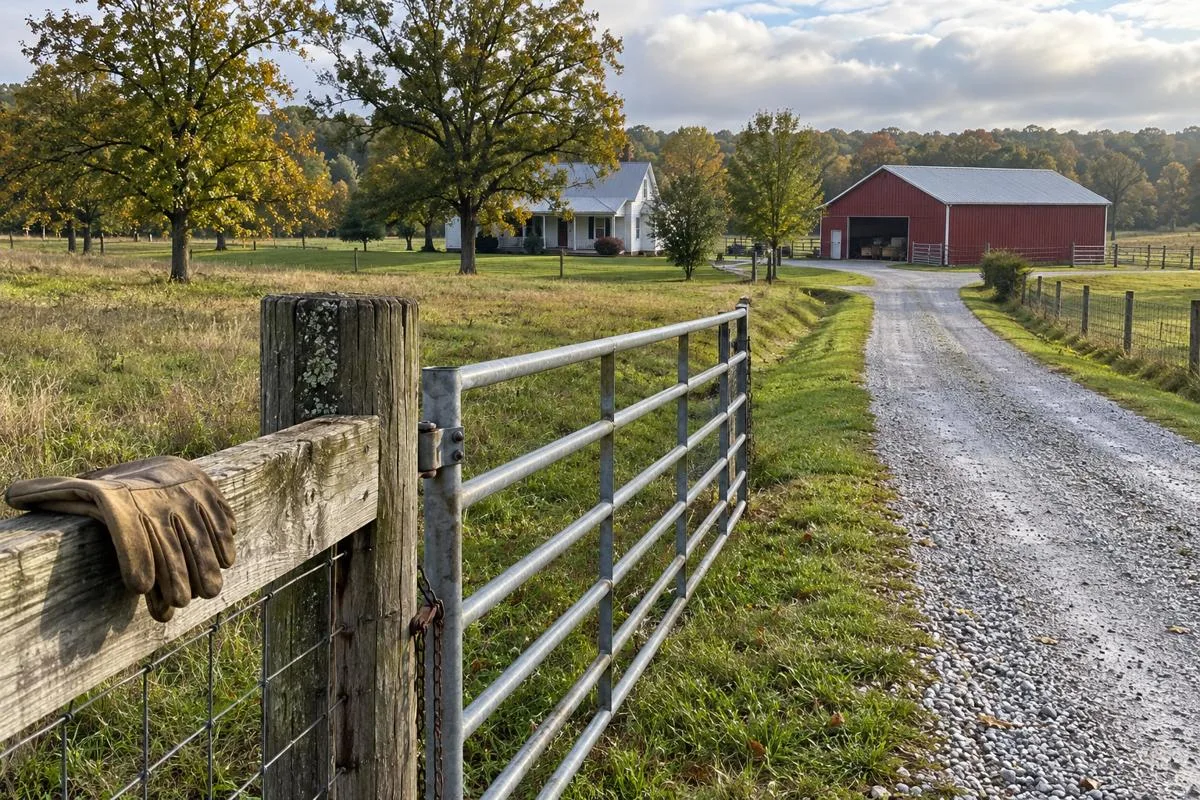
Check fences and gates before you need an emergency repair
If you keep livestock, a seasonal fence walk alone isn’t enough. Make checks part of your regular routine and look again after storms, fallen limbs, or anything that might damage the fence. How often depends on the animals, fencing, and conditions.
Even without livestock, it helps to watch for:
Leaning or loose posts.
Broken boards, loose wire, or damaged connections.
Gates that sag, drag, or won’t latch securely.
Brush and branches pressing against fencing.
Erosion beneath a fence or around a gate opening.
One important distinction: an existing fence is not proof of the legal property line. If you’re replacing a boundary fence or have questions about where ownership ends, confirm the boundary with a qualified surveyor before starting work.
Give barns, sheds, and shops a regular look
It’s easy to notice a problem inside the house and walk right past one in an outbuilding. But a small roof leak can become a much bigger issue when nobody goes inside that building for a few months.
From the ground, look for loose roof panels, damaged siding, and anything that has shifted after a storm. Inside, watch for water stains, damp stored items, daylight where it doesn’t belong, and doors that suddenly stop fitting properly.
Keep feed and stored materials organized so you can spot moisture or pest activity. Ventilation needs depend on how the building is used, especially if it houses animals.
Roof work, structural movement, and electrical problems belong with the appropriate professionals. A useful old barn doesn’t have to look new, but it does need to be safe for its intended use.
Know your well and septic system, if you have them
Not every acreage property has a private well, and wastewater systems vary. Start by finding out what serves your home, where the components are, and who maintains them.
For a private well, keep testing and service records together. The CDC’s well-water testing guidance recommends annual testing and additional testing when there’s reason to suspect a problem. Your local health department can help you decide which tests fit your location and circumstances.
For septic, ask a qualified provider for a maintenance schedule specific to your system and household. An inspection checks how the system is functioning; pumping removes accumulated material from the tank. They serve different purposes.
The EPA’s septic-care guide explains routine care. Keep vehicles and heavy equipment off the drainfield, and know where it is before planning a driveway, building, or other project.
Manage the land for how you actually use it
You don’t have to mow every acre like a front lawn. Pasture, woods, gardens, and intentionally managed wildlife areas have different needs.
Focus on keeping access routes usable, controlling unwanted growth near fences and buildings, and watching for damaged trees. Have a qualified, insured tree professional assess large or hazardous limbs. Contact the utility about anything near power lines.
If you’re unsure how to manage pasture or a natural area, local Extension resources can be a helpful starting point. The goal is a property that works for you, with a manageable plan for caring for it.
Keep one simple maintenance record
A notebook or folder on your phone is enough. Keep photos of recurring trouble spots, dates of repairs, contractor information, and well or septic records together.
After a storm, check access, fences, and visible building damage. As seasons change, review drainage, vegetation, and the jobs you want done before colder weather or spring growth. Put professional service reminders on your calendar so they don’t depend on remembering at the right moment.
For the house itself, my Homeownership 101 guide covers the basics. If you’re considering larger projects, planning improvements when you’re staying for a few years can help you think through your priorities.
Make a plan that fits your acreage
Living on land can be a lot of work, but there’s a reason so many of us love it. You don’t have to tackle everything at once. Start with safety, water, and access, then work through the rest in a sensible order.
If you’re considering a move to acreage, my guide to buying acreage near Lone Jack covers questions to ask before buying.
And if you’re thinking about selling your home and land around Lone Jack, Holden, Kingsville, or the surrounding Missouri communities, let’s talk. I’d be glad to walk through the property with you and help you decide what deserves attention before it goes on the market.