
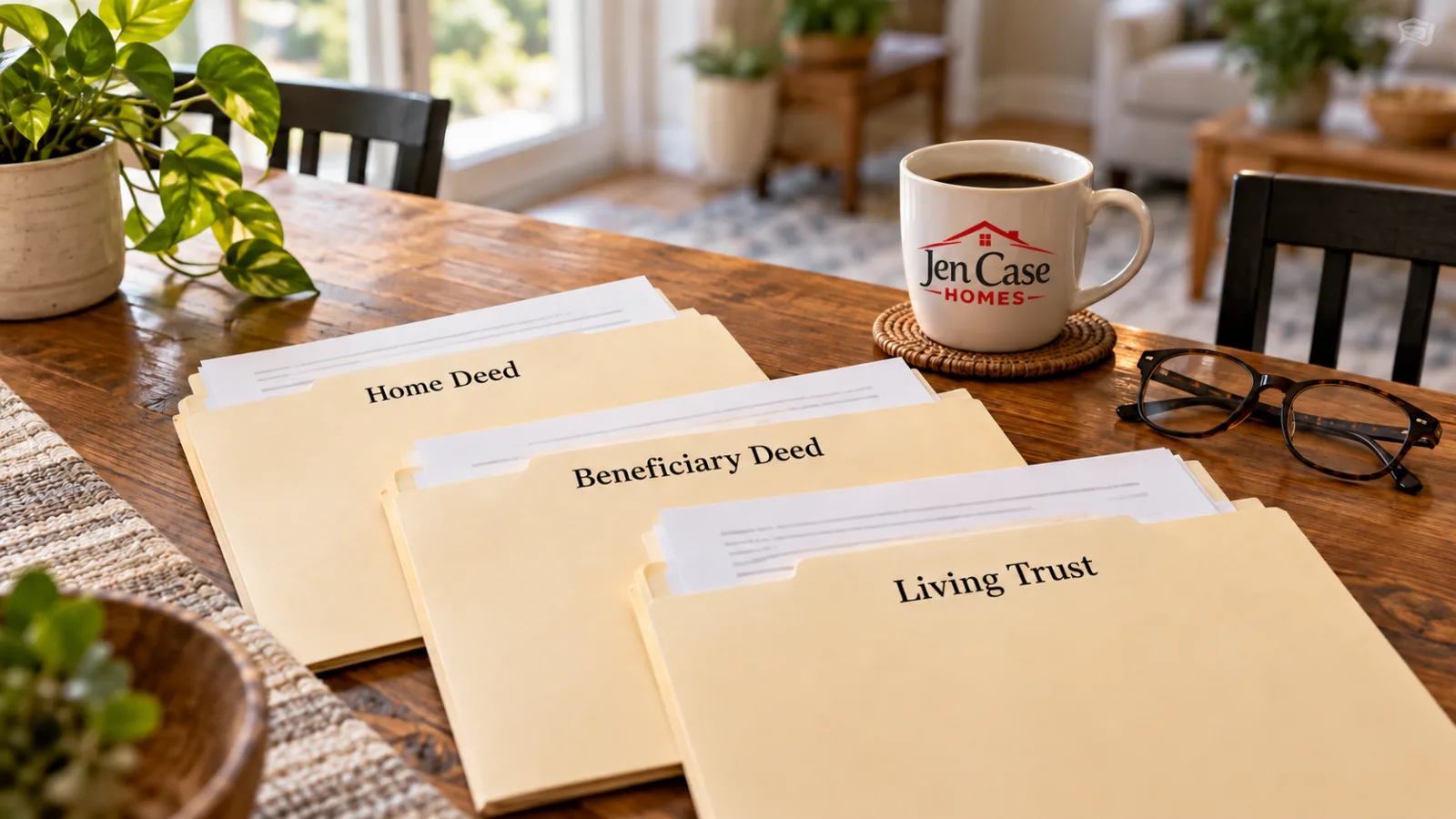
Understanding probate, trusts, and beneficiary deeds without all the legal jargon.
We spend a lot of time thinking about our homes. What needs fixing, whether we should update the kitchen, and where everyone will sit for Thanksgiving dinner.
But there’s one question many of us put off: What happens to the house when we’re gone?
It’s not the most comfortable conversation. Still, having it now can spare the people you love some confusion when they’re already dealing with a loss.
I’m a Missouri real estate agent, not an attorney. My goal is to help homeowners understand which questions to ask. This is general information, not legal advice. A Missouri estate-planning or probate attorney should review your situation.
Start with how the house is owned
If a home isn’t in a trust and doesn’t have a beneficiary deed, does it automatically have to go through probate?
Not necessarily. The way the property is owned matters, too.
Some ownership arrangements allow a surviving owner to receive the deceased owner’s interest without probate. Others do not. Simply having two names on a deed doesn’t tell you everything you need to know. [1] [2]
That’s why a good first question is: “Can you review my recorded deed and explain what happens if I die?”
Ask an attorney to explain the actual ownership arrangement rather than relying on memory, a tax bill, or a family understanding.
What is probate, in plain English?
Probate is a court process for handling a person’s estate after death. An estate is the property and other assets the person leaves behind. Depending on the situation, the process can include reviewing a will, appointing someone to handle the estate, addressing valid debts, and getting property to the people entitled to receive it. [2]
A home owned only in the deceased person’s name, without a valid arrangement for transferring it outside probate, will often need a probate-related court process to settle ownership.
The exact steps depend on the facts. Your attorney can explain which process applies and what documents are needed.
“But I have a will. Isn’t that enough?”
A will is important, but having a will does not, by itself, keep a home out of probate. It provides instructions for what should happen to property handled through the estate. [2]
If the goal is to help the house pass outside probate, ask an attorney whether a beneficiary deed, a living trust, or another ownership arrangement fits your needs.
These documents do different jobs. You don’t have to know all the legal terms to ask for a plan that works for your family.
What does a Missouri beneficiary deed do?
A beneficiary deed names who will receive the owner’s interest in the property after the owner dies. It does not transfer that interest to the beneficiary while the owner is still alive.
Under Missouri law, the deed must be properly executed and recorded with the recorder of deeds where the property is located before the owner’s death to work as intended. A document tucked into a drawer is not the same as a recorded beneficiary deed. [3]
A beneficiary deed does not erase existing mortgages or liens. The beneficiary receives the owner’s interest subject to applicable obligations affecting the property. [7]
This can be a useful planning tool, but it deserves more thought than simply picking a name. Ask an attorney:
- What happens if the person I name dies before I do?
- What if I want to name more than one person?
- What if a beneficiary is a child?
- How does this fit with my other estate documents?
The goal is a plan that still makes sense when life changes.
What about putting the house in a trust?
A living trust can provide instructions for managing property and passing it to the people you choose. Property properly held in the trust at death generally avoids probate administration. [2]
The important part is properly held in the trust. Signing trust paperwork alone does not necessarily put your house into it. Have your attorney confirm that the deed and trust documents work together.
A trust may suit some families better than a beneficiary deed. Your attorney can help you compare them based on your family, your wishes, and the property you own.
What if there is no will or plan?
When property passes through an estate without a valid will, Missouri law sets out who inherits. The answer depends on the surviving family members. [4]
It may not match what everyone assumed. Being the person who checks on the house, pays a bill, or has the keys doesn’t by itself establish that you are its sole owner.
Before anyone promises to sell the home or divide the proceeds, get the ownership questions answered.
The house still needs attention after a death
While the legal work is being sorted out, the house still has practical needs. Ask the attorney who has authority to act and how expenses should be handled.
A helpful starting checklist is to:
- Check property-tax balances and any notices or deadlines.
- Contact the mortgage company, if there is a loan, about its process after a borrower dies.
- Notify the insurance company of the death and ask about coverage, especially if the home will be vacant.
- Arrange for necessary utilities, security, yard care, and maintenance.
- Keep records of expenses and confirm how bills should be paid.
Avoid assuming a bill is being handled just because it used to be paid automatically. Confirm the arrangements with the appropriate company or office.
Can unpaid taxes put an inherited home at risk?
Yes. Unpaid Missouri property taxes can eventually lead to a tax sale or foreclosure through the applicable legal process. Procedures and deadlines depend on the county and circumstances. [5] [8]
Settling ownership and addressing delinquent taxes are separate tasks. Don’t assume opening probate resolves a tax delinquency or pauses a pending sale.
If taxes may be behind, contact the county office that handles property-tax collections. Ask what is owed, whether a sale or other proceeding is pending, and what deadlines apply. Share any notices with the attorney promptly.
For local information, Jackson County homeowners can consult the county’s delinquent land tax sale information. For a home in another county, contact that county’s collector.
This is a reason to check the facts, not to panic. Every property’s circumstances need to be verified.
What if nobody handled the house for a long time?
Don’t assume it is too late to get help. Also, don’t assume the same process is available no matter how much time has passed.
Missouri has legal deadlines, and certain older unresolved estates may require a court process to determine who inherited the property. An attorney can review the dates and explain the available route. [6]
Gather the recorded deed, death certificate, any will or trust documents, and tax and mortgage information. Those are useful starting points for the conversation.
A little planning can make a hard season easier
You don’t have to solve every estate-planning question today. Start by finding out how your home is titled and whether your current documents do what you think they do.
Review the plan after major life changes, and make sure a trusted person knows where to find the important documents.
If you’re dealing with an inherited home in the Kansas City area, I can help with the real estate side—understanding its market value, preparing it for sale, and coordinating with your attorney and title company once the legal path is clear.
Whether the family plans to keep it or sell it, getting clear answers early can make the next steps easier.
Contact Jennifer Case to discuss the real estate side of an inherited home.
Sources and further reading
- Missouri Revised Statutes § 442.450: Ownership by more than one person
- The Missouri Bar: Probate Law Resource Guide (revised 2024)
- Missouri Revised Statutes § 461.025: Beneficiary deeds
- Missouri Revised Statutes § 474.010: Inheritance without a will
- Missouri Revised Statutes § 140.150: Sale for delinquent taxes
- Missouri Revised Statutes § 473.663: Determining heirs in certain older estates
- Missouri Revised Statutes § 461.039: Liens and obligations affecting nonprobate transfers
- Jackson County: Delinquent Land Tax Sale