
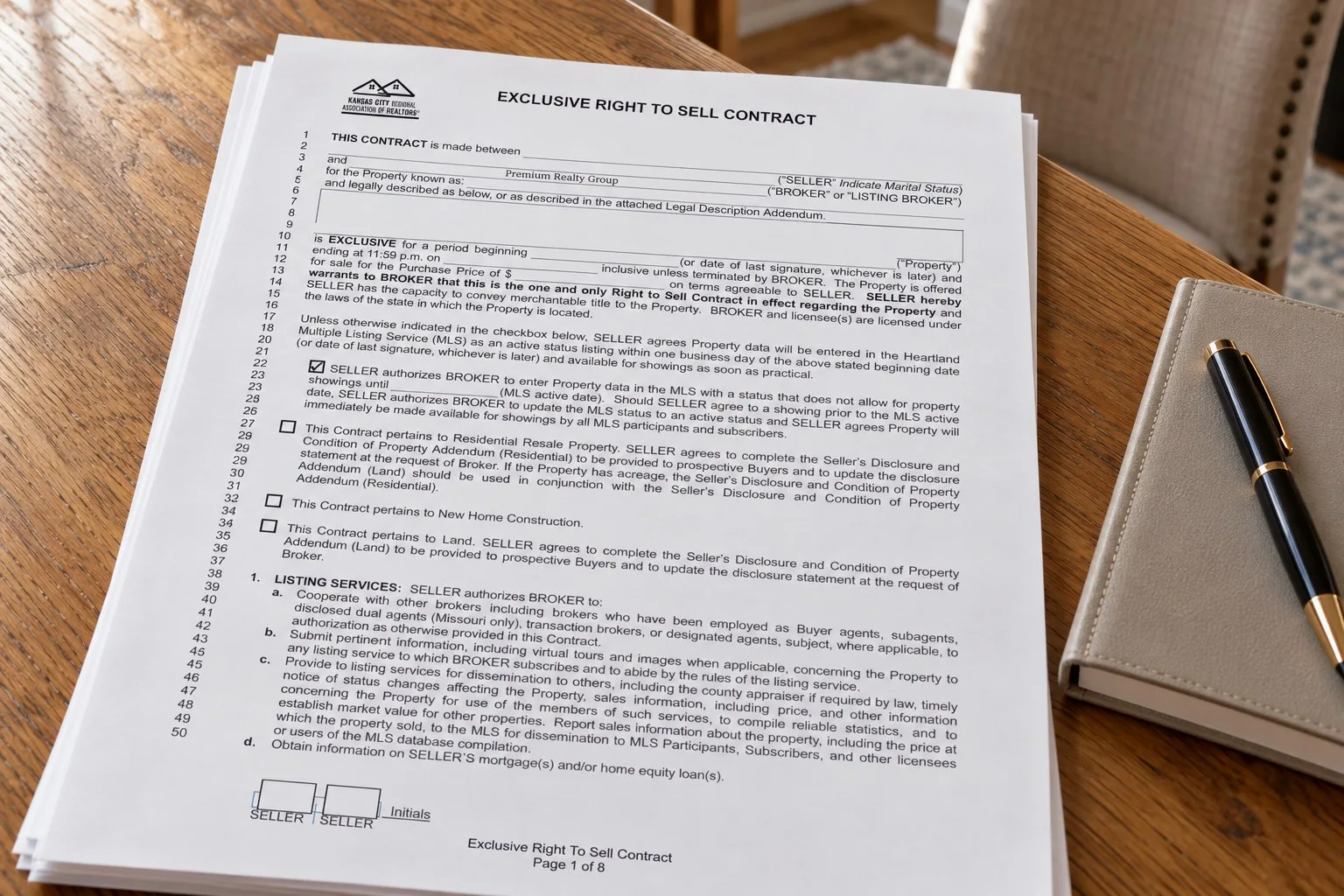
“Exclusive right to sell” sounds like one of those phrases you are supposed to understand because it appears on a real estate form.
Let’s slow down. Before you sign a listing agreement, you should understand what you are hiring the brokerage to do, what you are agreeing to pay, and what happens if your plans change.
Watch: Exclusive Right to Sell
This video gives you the quick explanation. The details in your own agreement deserve a closer look.
What does exclusive right to sell mean?
Generally, it gives one brokerage the exclusive right to handle the listing during the agreed term. Under this arrangement, the brokerage’s right to compensation does not depend on whether its own agent, another agent, or the seller finds the buyer. The actual payment obligations and any exceptions come from the contract.
That last part matters. The name of the agreement does not answer every question about when compensation is earned or payable. Read those provisions rather than assuming payment can only be due at closing.
What if I find the buyer myself?
This is the question I would want you to ask before signing.
Suppose a neighbor mentions that her brother might want your property. You later sign an exclusive right-to-sell agreement, and that brother decides to buy. Finding him yourself does not automatically remove your compensation obligation.
If you already have a possible buyer, tell your agent before entering the agreement. Ask whether an exception can be negotiated and documented, who it covers, and how long it applies. A conversation about a possible exception is not the same as having one in the signed contract.
Is exclusive agency the same thing?
No. An exclusive agency listing generally retains a seller’s ability to find a buyer independently without owing the listing brokerage compensation for that sale, subject to the agreement. An exclusive right-to-sell listing generally does not retain that exception unless it is specifically negotiated.
Similar names can hide an important difference. Ask your agent to explain the arrangement being offered and read the wording that addresses a buyer you find yourself.
What work should the agreement cover?
In Missouri, exclusive brokerage agreements must include minimum services involving offers, negotiations, related notices, and questions about those matters. Your agreement may provide additional services.
I would also want a seller to have a practical conversation about the marketing plan. Who arranges photography? How will showing requests be handled? How will you receive updates? What preparation needs to happen before launch?
I want you to know what will happen before your home ever goes on the market. If you have a work schedule, animals, a long driveway, outbuildings, or other details that affect showings, bring them up early so we can plan around the property you actually have.
Questions to ask about compensation
Broker compensation is negotiable; there is no legally required standard commission rate. Review the agreed amount or formula and ask when the obligation is triggered.
Also ask how any payment to a buyer’s brokerage would be handled. An offer of buyer brokerage compensation is not mandatory. Understand what you are authorizing, how it affects your expected proceeds, and how a buyer’s request would be considered.
I like to walk through an estimated proceeds worksheet with my sellers. That’s a breakdown of what you might receive after the sale expenses and mortgage payoff. Price alone does not tell you what you may take home. Review brokerage charges, your mortgage payoff, other closing expenses, and any proposed concessions together.
Dates, cancellation, and what survives expiration
Before signing, locate the start date and expiration date. Then ask what happens if you decide to pause the sale, withdraw the property, or end the relationship early.
Do not assume removing a home from online advertising cancels the agreement. Ask what written steps or mutual agreement are required and whether any charges or other obligations remain.
Check for a protection or carryover provision, too. Ask whether a later sale to a buyer introduced during the listing could create an obligation after expiration, and exactly what conditions would apply. If a provision is unclear, get an explanation before signing and legal advice when needed.
A short checklist before you sign
Are the property, owners, price, and contract dates correct?
Do you understand the services and marketing commitments?
Have compensation, payment triggers, and additional charges been explained?
Are any preexisting buyers or exceptions documented?
Do you understand withdrawal, termination, and post-expiration provisions?
Have you received a complete copy of the agreement?
Start with a conversation
You can talk with me about selling before your house is ready for photos. That gives us time to look at the property, discuss your goals, and review the paperwork without trying to squeeze everything into listing day.
Before you start tackling projects, my pre-listing checklist can help you get organized. We can also talk through which jobs make sense for your home before you spend money.
My home selling process guide walks through the broader plan. Get in touch if you would like to talk through your next move.
I’m a REALTOR®, not an attorney. This is general information, not a legal interpretation of your agreement. Consult an attorney about legal questions or disputes. Jennifer Case, REALTOR® | Jen Case Homes | Premium Realty Group.
Sources: NAR’s listing agreement guide and Missouri’s brokerage agreement requirements.