
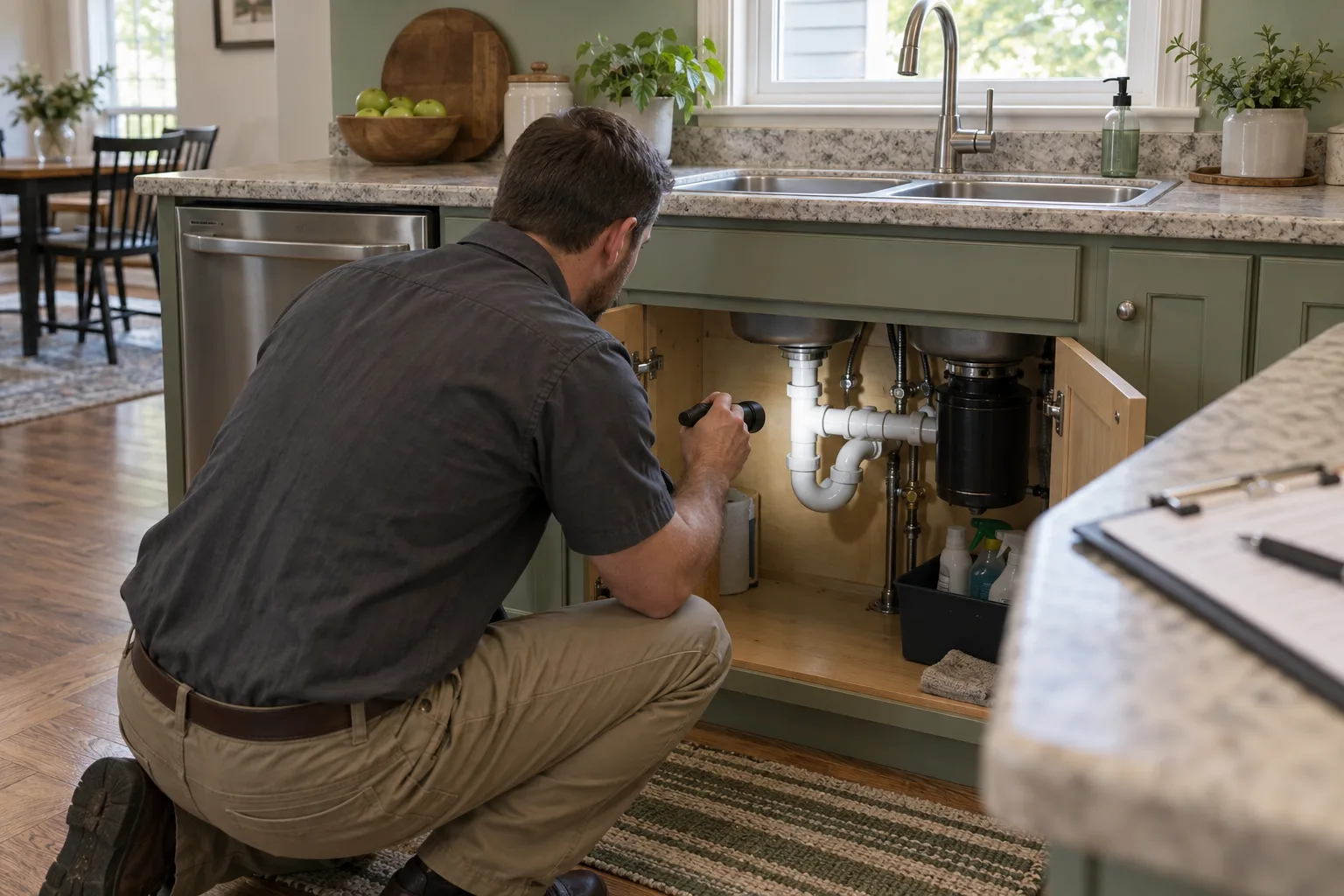
You found a house you can picture yourself living in. Your offer was accepted. You know where the Christmas tree would go.
And then, almost immediately, we're talking about inspections.
If you're a first-time buyer, this is often the point where the excitement of getting a house under contract bumps into the reality of:
“Okay...what happens now?”
A home inspection is one of the ways you learn more about the property you're preparing to purchase.
I like to think of it as your opportunity to get better acquainted with the house.
You've probably walked through it already, but there's a big difference between touring a house and inspecting one.
Let's talk about what that means.
What Is a Home Inspection?
A general home inspection is a visual evaluation of the property's accessible systems and components.
In plain English, a professional home inspector takes a much closer look at the house than you probably did during your showing.
Depending on the property and scope of the inspection, that may include the:
Roof and exterior
Foundation and visible structural components
Heating and cooling systems
Electrical system
Plumbing
Attic and insulation
Basement or crawl space
Windows and doors
Interior walls, ceilings, and floors
Built-in appliances
Drainage and grading immediately around the home
Afterward, you'll typically receive a written report describing what the inspector observed, often with photos and recommendations.
What Doesn't a Home Inspection Do?
This is just as important as understanding what it does.
A general home inspection isn't a guarantee that nothing will ever go wrong with the house.
It's also not a warranty.
And it isn't necessarily going to evaluate every possible feature of every property.
There may be situations where a specialist or additional inspection makes sense.
If an inspector sees something concerning about the foundation, for example, further evaluation by a qualified structural professional may be recommended.
If you're buying a property with a septic system, well, chimney, or other specialized feature, we may need to discuss additional evaluation.
A general inspection gives us a broad look at the home.
It doesn't make one person an expert in every system and specialty imaginable.
Is a Home Inspection the Same as an Appraisal?
No.
This is one of the most common points of confusion for first-time buyers.
The inspection primarily helps you learn about the condition of the property.
An appraisal develops a professional opinion of the property's value and is commonly part of the mortgage process when financing is involved.
They're different steps with different purposes.
I've broken down the distinction in [Home Inspection vs. Appraisal: What's the Difference?] if you'd like the full explanation.
When Does the Home Inspection Happen?
The inspection generally happens after you're under contract.
Your purchase agreement establishes deadlines and rights related to inspections, so this part of the transaction can move fairly quickly.
That's one reason I don't want you waiting several days after your offer is accepted before thinking about an inspector.
We'll talk about what needs to happen and when.
You don't need to keep every deadline in your head.
I will.
Should Buyers Attend the Home Inspection?
When practical and permitted by the inspector, I like buyers to have an opportunity to learn about the property firsthand.
You're not there because you're expected to know what you're looking at.
Quite the opposite.
This is a chance to learn.
An inspector may be able to show you things like the location of the main water shutoff, electrical panel, HVAC equipment, or maintenance items you'll eventually be responsible for as the homeowner.
That's especially useful if this is your first house.
There's something very different about hearing:
“You'll want to keep an eye on this.”
while standing in front of the actual thing they're talking about.
How Long Does a Home Inspection Take?
Plan on it taking a few hours.
The exact time depends on the size, age, condition, complexity, and features of the property, as well as the inspector's process.
A smaller subdivision home and a large house on acreage with multiple structures aren't necessarily going to take the same amount of time.
This isn't something I want rushed simply because everyone has somewhere else to be.
What Happens After the Inspection?
You'll receive an inspection report.
And there's a good chance it's going to look intimidating at first.
Take a minute before deciding your dream house is falling apart.
Inspection reports are designed to document findings. Even a well-maintained house may have a long report containing photographs, observations, maintenance suggestions, minor defects, and more significant concerns.
The important thing isn't necessarily how many items are on the report.
It's what those items are.
We need to distinguish between things such as:
Significant defects
Safety concerns
Functional problems
Items needing further evaluation
Deferred maintenance
Routine homeowner maintenance
Minor or cosmetic issues
A loose doorknob and evidence of foundation movement shouldn't carry equal weight just because they're both bullet points in the same report.
Can a House Fail an Inspection?
A typical general home inspection isn't a simple pass-or-fail event.
The inspector reports what they observe.
Then you decide how you feel about that information and what steps are available under your contract.
I don't want my buyers thinking the inspector is going to hand us a piece of paper saying:
PASS
or
FAIL
Real houses are more complicated than that.
What If the Inspector Finds Something Serious?
Then we gather information.
Suppose the inspector sees something that could indicate a structural concern.
That doesn't mean your REALTOR® should diagnose the foundation.
And it doesn't mean we immediately assume the house is falling down.
It may mean we need more information from someone qualified to evaluate that particular issue.
The same applies to electrical, plumbing, HVAC, roofing, sewer, septic, or other specialized concerns.
My role is to help you navigate the real estate transaction and understand your contractual options.
When we need technical expertise, we bring in technical expertise.
Can Buyers Ask the Seller to Fix Things?
Depending on the contract and circumstances, inspection findings may lead to requests or negotiations.
But I don't approach an inspection with the expectation that we're going to turn the report into a giant seller to-do list.
Homes aren't perfect.
Even new ones.
I want to help you look at the big picture.
What affects safety?
What affects function?
What could be expensive?
What needs additional investigation?
What is normal maintenance that comes with owning a house?
Then we look at your contract and discuss the options available to you.
What Are Common Inspection Concerns in Missouri Homes?
Every house is different, but Missouri homes give us plenty to pay attention to.
Depending on the property, inspectors may encounter things involving:
Roof condition or storm damage
Foundation cracking or movement
Drainage around the foundation
Basement or crawl-space moisture
Aging HVAC equipment
Electrical components
Plumbing concerns
Exterior wood deterioration
Attic ventilation or insulation
Grading around the home
Age matters, too.
What I expect to encounter in an older Independence home may be different from what I expect in newer construction around Grain Valley.
Different doesn't automatically mean bad.
It simply means we evaluate the property in front of us.
What Additional Inspections Might a Buyer Consider?
A general home inspection doesn't necessarily cover everything.
Depending on the property, its location, its age, and what the general inspection reveals, buyers may consider additional evaluation involving things such as:
Radon
Sewer line
Chimney
Wood-destroying insects
Structural concerns
Septic system
Well or water quality
Not every buyer needs every inspection on that list.
That's why I'd rather talk about the actual property you're buying than hand you an enormous generic checklist from the internet.
What About Inspections on Acreage and Rural Missouri Homes?
This is where things can get particularly interesting.
If you're buying acreage in Johnson County, Lafayette County, eastern Jackson County, or one of our surrounding rural communities, you may be buying considerably more than a house.
There could be:
A septic system
Private well
Barn
Shop
Fencing
Pond
Long driveway
Multiple outbuildings
Large areas of land with drainage or access considerations
A standard home inspection isn't necessarily a comprehensive evaluation of all of those things.
If you're buying a place because you want horses, livestock, a workshop, or room for a homestead, I also want us thinking beyond whether the dishwasher works.
Does the property actually work for what you're planning to do with it?
That's part of looking at the whole property rather than treating every purchase exactly the same.
What About New Construction?
New doesn't mean there's nothing to inspect.
A newly constructed home can still have incomplete work, installation issues, damaged components, or things that were simply missed during construction.
Builder processes, municipal inspections, warranties, and an independent buyer's inspection don't all serve exactly the same purpose.
If you're buying new construction, we'll talk specifically about the inspection opportunities available in your transaction rather than assuming a brand-new house automatically means there's nothing to look at.
My Advice Before Your Home Inspection
First, expect the inspector to find things.
That's the inspector's job.
Second, don't panic over the length of the report.
We'll look at what the findings actually mean.
Third, ask questions.
If you don't understand something, this is not the time to pretend you do.
And finally, remember what the inspection is for.
It isn't there to scare you out of buying a house.
It's there to give you more information about the house you're considering buying.
Information is useful.
A Home Inspection Is About Understanding What You're Buying
Buying a house can feel like a strange combination of excitement and nervousness.
You fall in love with the kitchen.
You picture your furniture in the living room.
You start thinking about where the Christmas tree will go.
And then someone crawls underneath the house with a flashlight.
Welcome to real estate. 😊
But this part of the process is valuable.
The inspection gives you an opportunity to learn more about the property before closing and make decisions with better information.
You don't have to interpret everything by yourself, either.
If you're buying in Blue Springs, Lee's Summit, Grain Valley, Independence, Oak Grove, Lone Jack, or the surrounding eastern Kansas City area, I'll help you keep track of the process and understand what comes next.
You can learn more on my Buyer page or contact me when you're ready to talk.
And if you're wondering how the inspection fits together with the lender's appraisal, read [Home Inspection vs. Appraisal: What's the Difference?] next.